

During the COVID-19 pandemic, a young Indian boy named Abhigya Anand gained popularity for making various predictions using Indian astrology. (Note 1)
This piqued my interest in various mystical studies, such as divination, astrology, and numerology.
I wanted to understand if there was a systematic way to predict major life events and even prevent unfortunate occurrences.
I attended numerous courses on modern astrology, classical astrology, Indian astrology (jyotish), Chinese astrology, numerology, tarot cards, I Ching divination, Feng Shui, and the Western concept of the "Garden of Life" (similar to hypnosis).
Of course, I must admit that these subjects are vast and profound, with increasingly complex calculations and rules as you delve deeper.
I only completed some introductory courses and can't apply these practices for personal readings (so please don't ask me for fortune-telling!).
However, in the process of learning, I was curious about the philosophies and worldviews behind these studies. Even though I couldn't grasp the complex calculations, understanding the underlying philosophies enriched my experience and made me appreciate the value of learning these subjects.
Moreover, studying these subjects has a benefit.
Since they aim to encompass and address various aspects of life, learning them helps in transcending the self and viewing the world from a broader perspective.
In the realm of astrology and divination, I found the philosophies behind classical astrology and Indian astrology particularly fascinating.
Therefore, I will share a brief overview of what I encountered, although my understanding might not be entirely accurate.
I hope this sharing can provide a preliminary understanding and spark interest for those who are curious.

Philosophy of Classical Astrology:
In classical astrology, each natal chart represents a predetermined script.
Regardless of the suffering this script may bring, every soul knew how it would unfold before birth.
The purpose of life is to learn the lessons inherent in this script, gaining inspiration and elevation through the experience.
In the classical astrological view of destiny, adjustments can be made, but major changes are impossible because the script is already written.
The boundaries of the natal chart extend to the farthest planet, Saturn, and everything below Saturn is governed by the constraints of time.
Only beyond Saturn lies a realm free from temporal limitations—a timeless and eternal realm.
As all things in the world exist within the confines of time, they can only experience life linearly.
Yet, everything's past, present, and future has already happened in the eternal realm, so our lives are already complete.
Through astrology, we can observe what is happening and the future trends, gaining insight into how the universe operates.
We realize that everything in the universe follows a structured order.
In ancient times, creating a natal chart was a complex task, affordable only to the nobility.
The practical application of astrology for the elite included assessing if a newborn could survive, as early mortality was common in those times.
Predicting major life events and fortunes was not just a psychological description; it served a practical purpose.
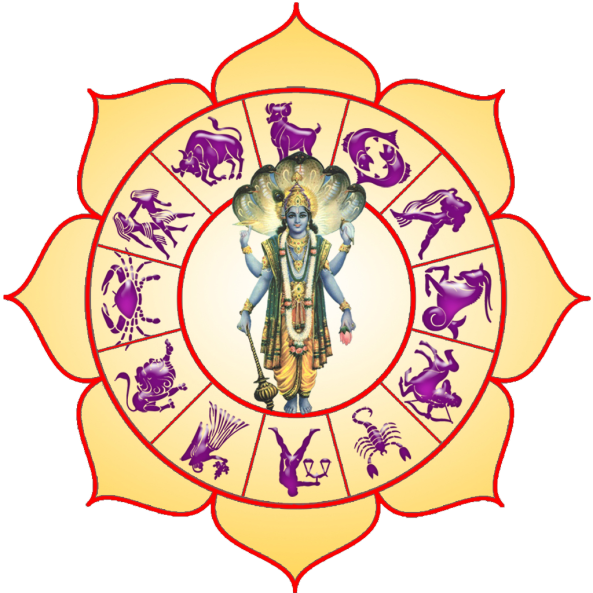
Philosophy of Indian Astrology (Jyotish):
The fundamental principle of the universe's operation is karma, and human destiny operates similarly.
The fluctuations in life are mere manifestations, and the true controller is the underlying karma.
Matured karma is unchangeable (or exceedingly difficult to change), while immature karma may have room for transformation.
Indian astrology, known as Jyotish, explains the cause-and-effect cycle by interpreting the karma from past lives influencing the present life.
Indian philosophy recognizes four goals of life: Dharma (righteousness), Artha (prosperity), Kama (desire), and Moksha (liberation).
Dharma involves understanding the laws governing the universe and living according to them to establish a correct worldview and exhibit virtuous behavior.
Artha encompasses material wealth and resources, including occupation, skills, health, and financial prosperity.
Kama relates to fulfilling physical desires and sensory enjoyments.
Moksha represents liberation, escaping the cycle of birth and death and achieving ultimate freedom and salvation.
Liberation is the ultimate and highest goal of life, while the other three are processes and stages towards it. (Note 2)
Before profit(Artha) and desire(Kama) is Dharma; after profit and desire is Moksha.
Without the guidance of Dharma and the aim for Moksha, pursuing profits and desires can lead to a loss of direction.
However, we can also reveal Dharma and Moksha through profits and desires.
Without profits and desires, the strength of Dharma and Moksha may not be fully realized.
These four goals are reflected in each person's birth chart, and the interpretation of one's chart aims to help individuals understand and learn from the karmic script they are enacting.
Indian astrology, Jyotish, which means "light of life," delves deep into the workings of karma, allowing people to enjoy worldly desires while also offering guidance towards liberation.
Afterword:
The insights shared above only scratch the surface of these areas of knowledge.
Each astrological system contains a vast framework, and anyone who explores these systems will experience the philosophical thinking that underpins them.
Many people wonder which system is more accurate.
In my experience, regardless of the astrological system used, they all have a certain level of accuracy.
For example, during a certain period when my job was changing, different astrological systems could detect the change.
However, the accuracy of the readings is one thing, and the experiences, insights, and personal growth one gains while making choices and going through these events are even more important.
Furthermore, each astrological system not only interprets birth charts but also offers various methods for "remedies" based on their theories and philosophies.
These can include choosing auspicious dates, wearing specific gemstones, selecting colors and directions, Western astrology's magic and humoral theory, and Indian astrology's homas, deity worship, and recitation of mantras.
I mention these not to judge their effectiveness but to emphasize the value of experiencing different perspectives and viewing the world from diverse angles, ultimately living a more enriched life.
Note 1: However, after watching related videos, I felt that his predictions leaned more toward war rather than a pandemic.
Note 2: Indian religion derives four stages of life from the four goals:
Brahmacharya (student), Gṛhastha (householder), Vanaprastha (forest dweller), and Sannyasa (renunciant, monk).
Youth is for learning.
Adulthood is for managing a household.
Old age is for renunciation.
Death is for liberation.
References:
https://www.destiny88.com/印度遊學的回憶與印度占星(一)/
https://www.destiny88.com/為什麼是印度占星/
https://www.destiny88.com/我們都活在過去世已然設定好的劇本嗎-印度占星的/
https://www.youtube.com/watch?v=haI_nQt5sYM&list=PL5ywJ-DzskGzgdxS2xYpNQwTPVhu9Wzug&index=7
https://zh.wikipedia.org/zh-tw/法_(印度哲學)
https://academic-accelerator.com/encyclopedia/zh/artha
https://zh.wikipedia.org/zh-tw/欲樂
https://zh.wikipedia.org/zh-tw/解脫
https://en.wikipedia.org/wiki/Āśrama_(stage)
https://www.flickr.com/photos/zeevveez/2921030808
https://vedicambassador.wordpress.com/2014/02/22/vedic-astrology-jyotish/
瑞公子,占星
https://www.facebook.com/ridleydetaipei
篠安的天使花園
https://www.facebook.com/angelstarot
塔羅~寶咖咖~
https://www.facebook.com/tarot123
http://www.tarot123.idv.tw/index.html
蕭思源天象觀測站
https://www.youtube.com/@ASTROJYOTICHA/featured
蕭思源占星俱樂部
https://www.facebook.com/jyotish.tw/?locale=zh_TW
開運龍
